
Call recording data licensing: consent first
Selling call recordings starts with consent and purpose, not audio quality. A UK business may record its own calls for business purposes only if it has made reasonable efforts to tell callers that recording may happen. Data protection law then limits reuse to purposes compatible with the original one. Licensing recordings for AI use is a new purpose that needs its own check before the archive is described to anyone.
By Sell My Company DataPublished 13 November 2026
No files needed to start
- Sources
- 3 primary sources
- Reading time
- About 2 min
- What this adds
- A consent trail worksheet in table form. It links each stage of a call archive to the proof a seller should hold. It also says which gaps stop an archive being offered.
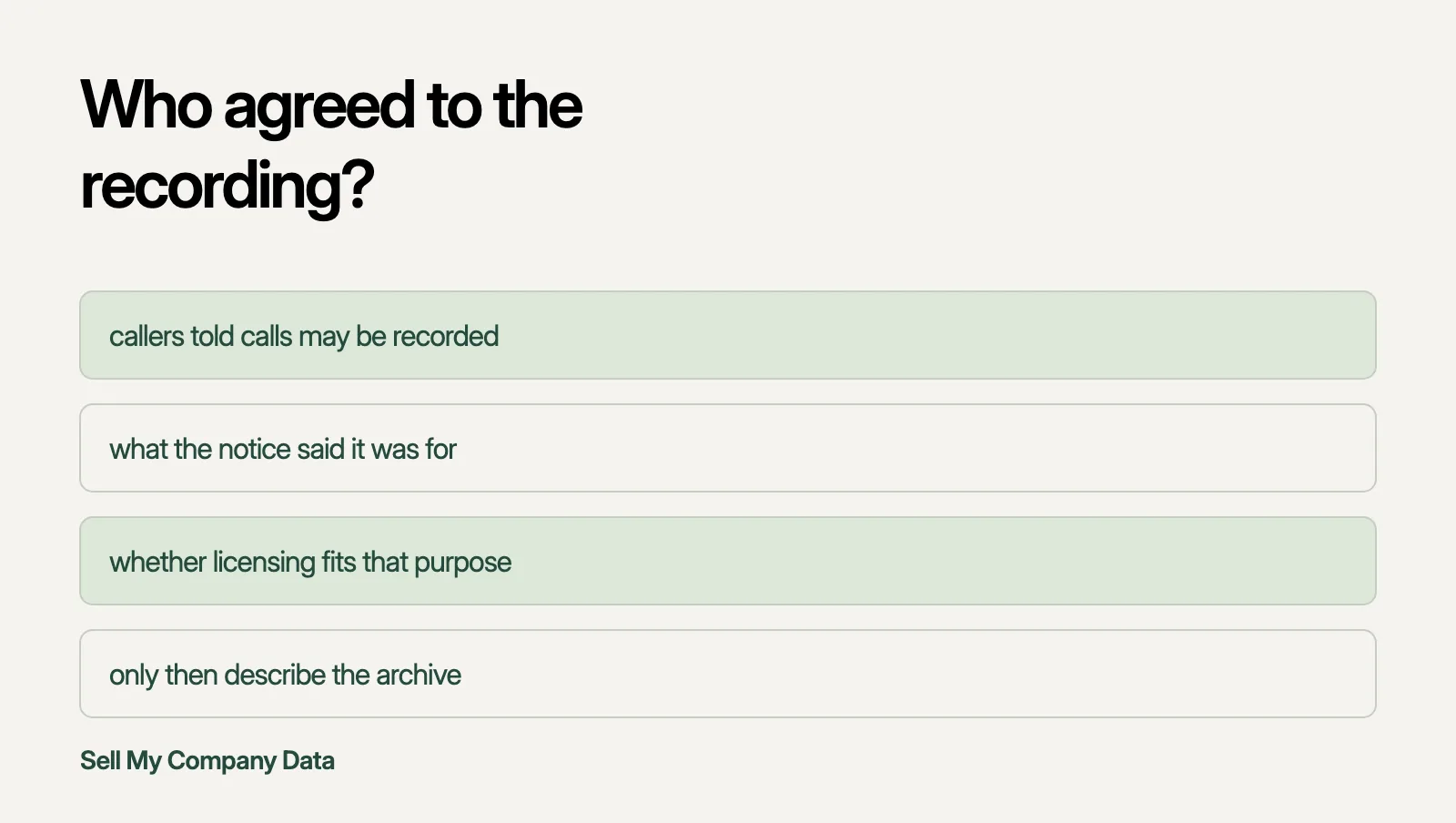
Recording needs notice and a limited purpose
Recording a call is an interception, so the starting point is whether the law allows it. The business practice rules authorise it in set cases, such as keeping a record of communications to establish the existence of facts. They attach conditions. One condition is that the system controller has made all reasonable efforts to inform every person who may use the telecommunication system that communications may be intercepted.
So the first question about an archive is plain: were callers told? A recorded greeting, a notice on the phone system and a line in staff terms are the usual evidence. An archive with no trace of notice is a problem before any buyer is involved.
Those rules also tie recording to the business's own purposes. They do not say the recordings can be sold. That is a separate question.
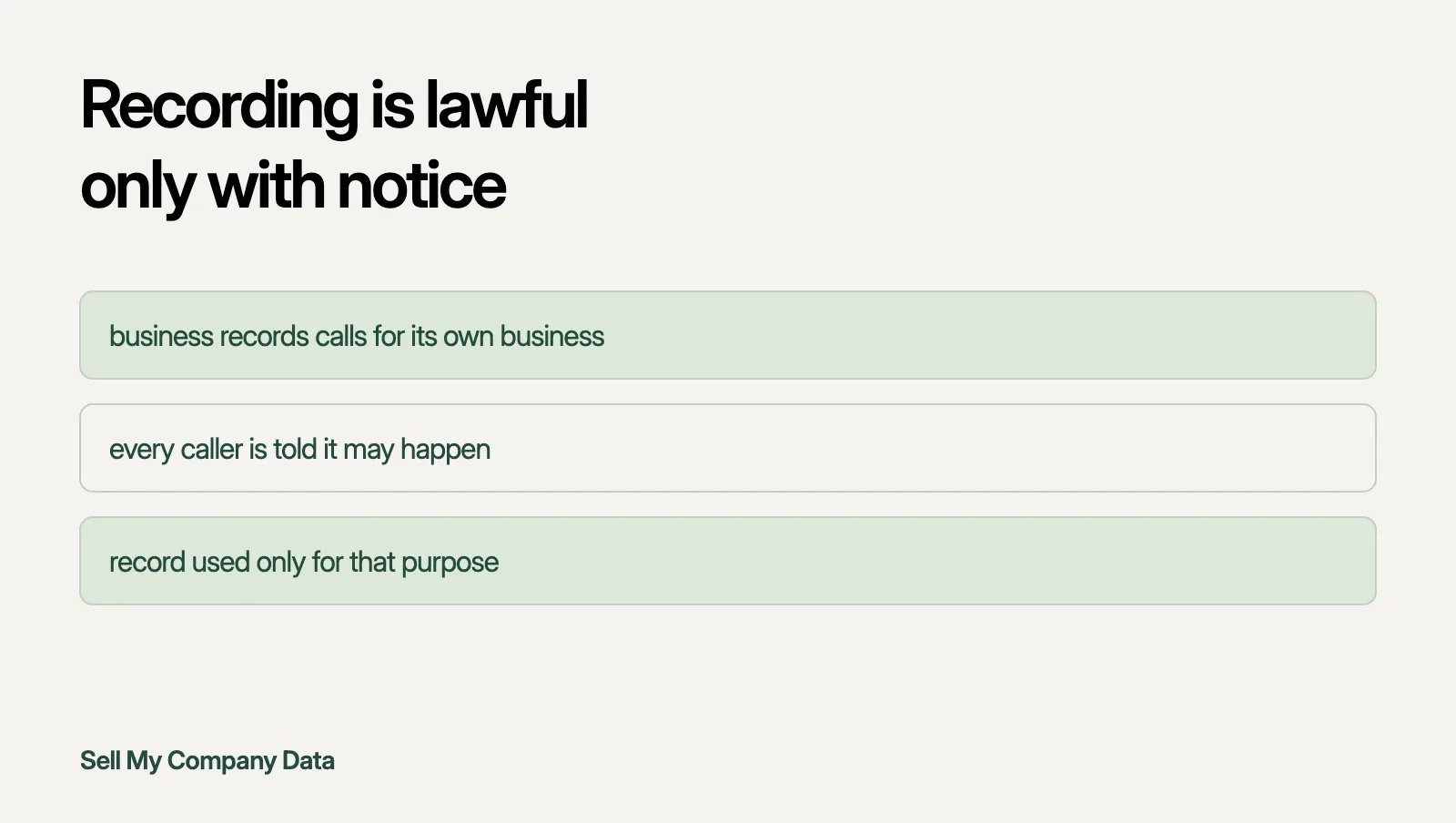
Licensing is a new purpose, so check it
Calls contain personal data. The UK GDPR defines it as any information relating to an identified or identifiable natural person. A voice, a name and an account number said aloud all count.
The same law says personal data must be collected for specified, explicit and legitimate purposes and not further processed in a way that is incompatible with the original purpose.
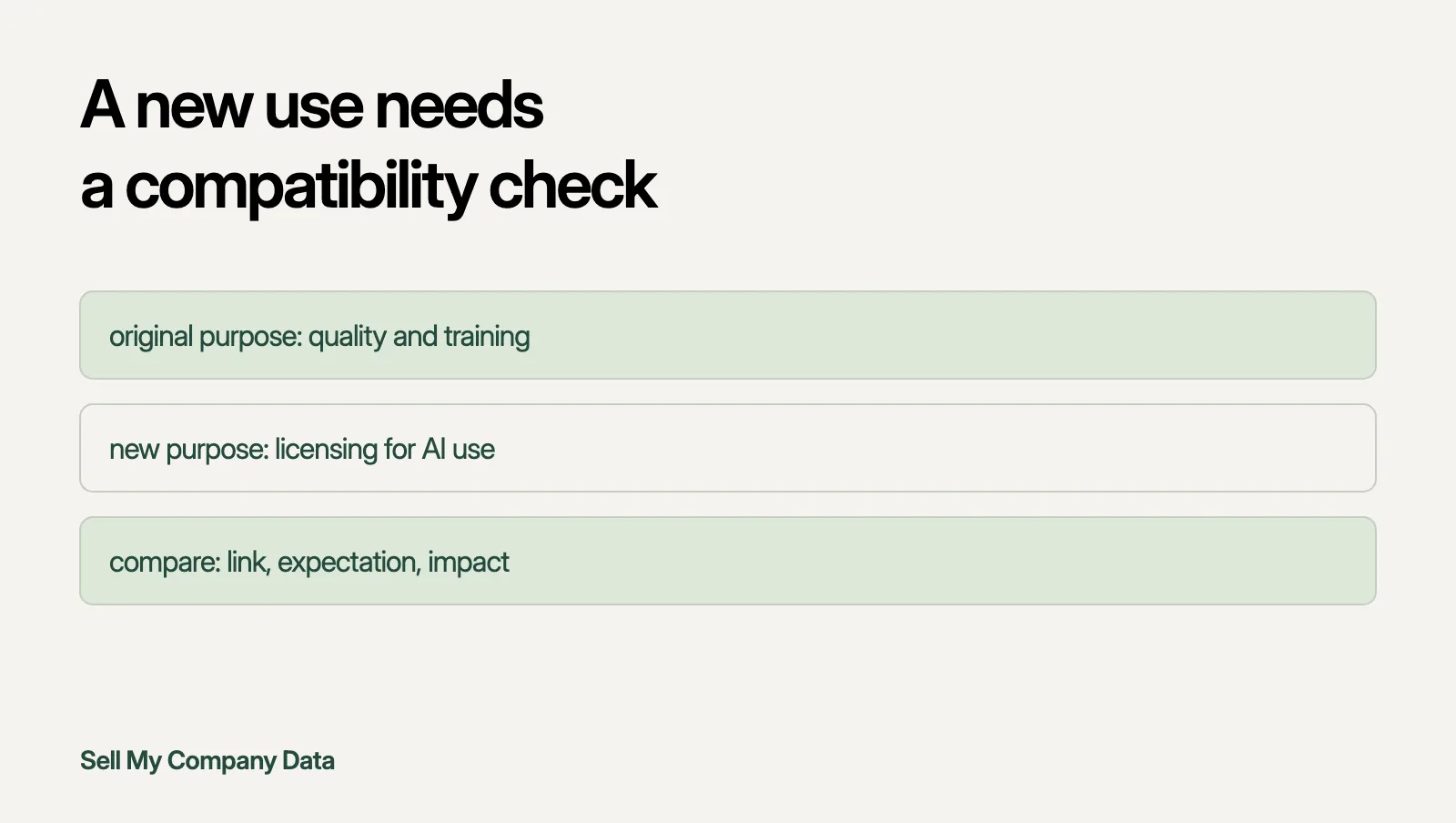
A call recorded for training staff or resolving disputes was collected for that. Offering the audio to an AI buyer is a different use. Whether it is compatible is a judgement the seller has to make and write down.
Ask what callers were told. Ask what they would reasonably expect. Ask what the effect on them could be if a buyer held their voice. If the answers are unclear, assume fresh consent may be needed.
Consent trail worksheet
| Stage | Question to answer | Proof to gather | If missing |
|---|---|---|---|
| Notice | Were callers told recording may happen? | Greeting script, phone system notice, staff terms | Hold the archive back |
| Original purpose | What did the notice say the recording was for? | The notice wording and privacy notice | Treat purpose as unclear |
| New use | Does licensing fit that purpose or need fresh consent? | A written compatibility note | Do not describe the archive as cleared |
| Spoken personal data | What is said aloud, and who removes it? | A sample review and a removal plan | Exclude those calls |
| Vulnerable callers | Do calls involve minors, patients or people in distress? | Call categories in the phone system | Exclude those calls |
Describe the archive before anyone hears it
The first message to a buyer is a description, not a file. Give the call types, the rough hours, the years covered, the language, whether transcripts exist and whether outcomes such as resolved or escalated are recorded against each call.
Say in plain words what is documented. For example: callers were told about recording; the notice stated a purpose; a compatibility note exists. If one of those is missing, say so rather than rounding it up.
Hold audio samples back until the personal data question is settled. A short, clean sample comes later and only from calls you have reviewed.
Sources
- Telecommunications (Lawful Business Practice) (Interception of Communications) Regulations, regulation 3 (legislation.gov.uk). Checked 13 November 2026. Relevant text: the system controller has made all reasonable efforts to inform every person who may use the telecommunication system in question that communications transmitted by means thereof may be intercepted
- UK GDPR, Article 5 (legislation.gov.uk). Checked 13 November 2026. Relevant text: for specified, explicit and legitimate purposes and not further processed
- UK GDPR, Article 4 (legislation.gov.uk). Checked 13 November 2026. Relevant text: any information relating to an identified or identifiable natural person
Questions
Can a business sell recordings of its own customer calls?
Not automatically. The business needs a lawful reason for recording and callers need to have been told. Any new use, such as licensing, must fit the original purpose or be covered by fresh consent.
What if recording notices were given years ago?
Check what they said. An old notice that mentions only quality monitoring or training may not cover licensing, so the compatibility check still has to be done.
Do transcripts avoid the problem?
No. A transcript of a call still contains whatever personal data was spoken. The same notice and purpose questions apply.
Should I send a sample recording to a buyer first?
No. Send a written description first. Samples come after the personal data is reviewed and the consent position is documented.
Is this legal advice?
No. It is general information about UK rules on recording and reuse. Have a solicitor review any gap before you rely on it.