
Manufacturing ERP data licensing: secrecy first
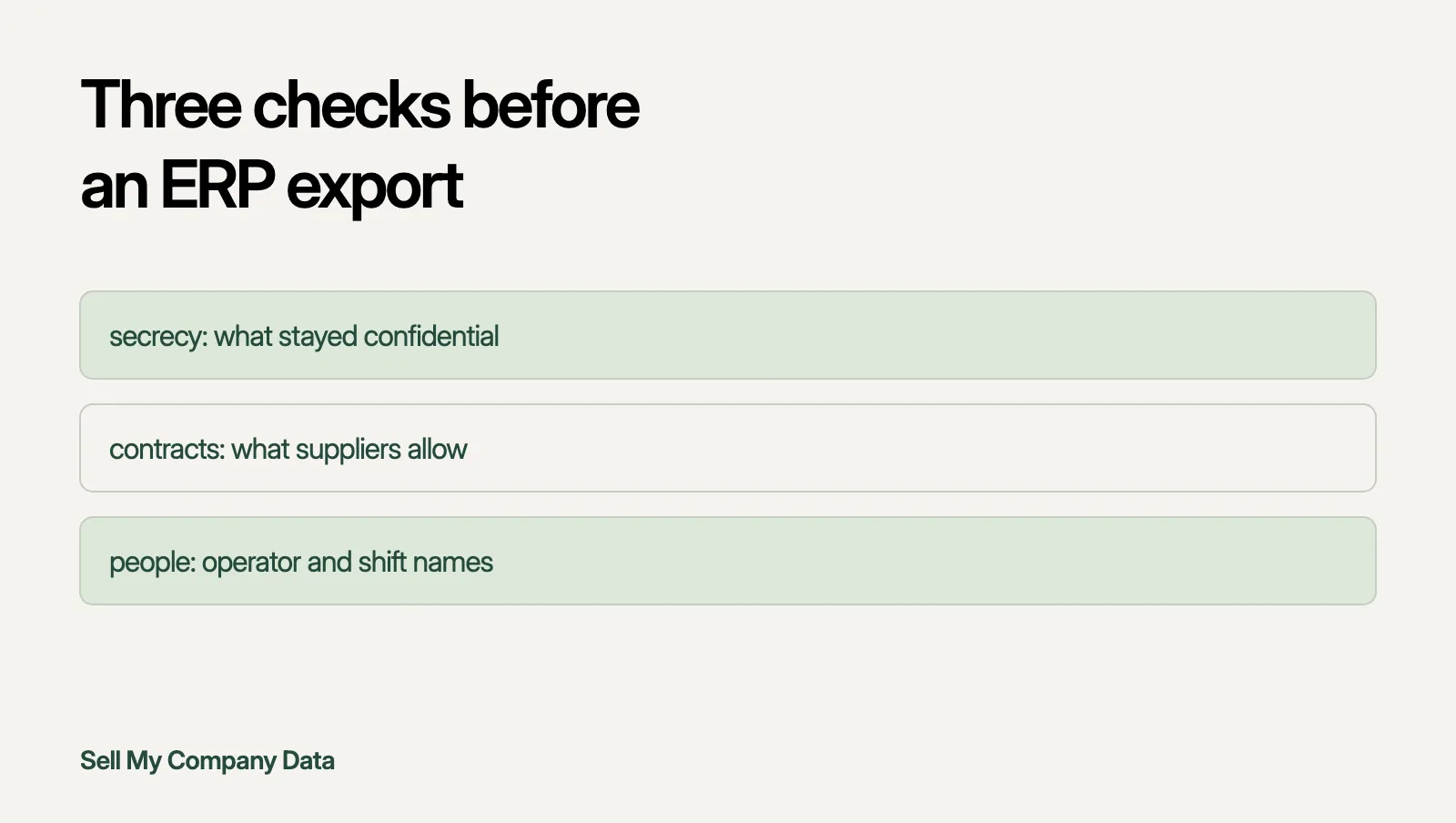
Manufacturing ERP data is valuable because it shows how a factory makes things. That is also why it is risky to license. Much of it may be a trade secret that a disclosure could destroy. Supplier and customer terms often restrict it. Staff records are personal data. Check each data class against those three points before you describe the archive to a buyer.
By Sell My Company DataPublished 14 November 2026
No files needed to start
- Sources
- 4 primary sources
- Reading time
- About 3 min
- What this adds
- An ERP data class audit table. It lists the main data classes in a manufacturing export, names the main legal risk for each and gives the minimum check before the archive is described to a buyer.
Most ERP data only has value while it stays secret
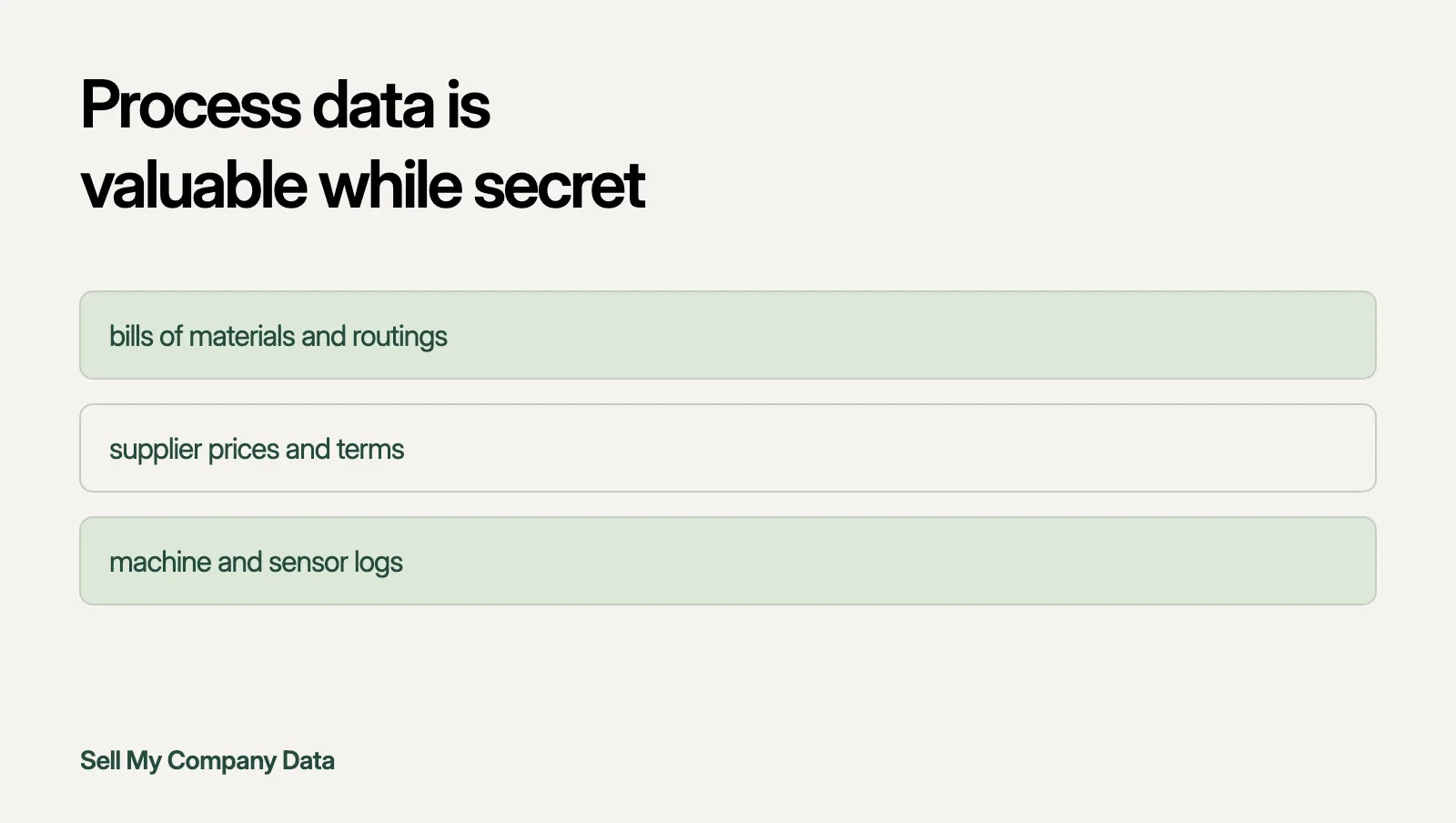
An ERP system holds how a factory makes things: bills of materials, routings, supplier prices and quality results. That is the part a buyer of training data would want. A competitor would want it too. UK law protects it only when it meets a test. The Trade Secrets Regulations set a three part test. The information must be secret. It must have commercial value because it is secret. The holder must have taken reasonable steps under the circumstances, by the person lawfully in control of the information, to keep it secret.
So the first question is not whether you own the export. It is whether the information is still secret after you hand it over. A licence to an AI buyer is a disclosure. If the contract lets the buyer pass the data on, or train a model that can repeat it, the secrecy that gave the data its value may go.
Look at what you did to keep each data class secret so far. Access controls, staff confidentiality terms and supplier agreements all count as steps. A folder that was shared freely does not look like a protected secret.
Supplier and customer terms usually say who may see it
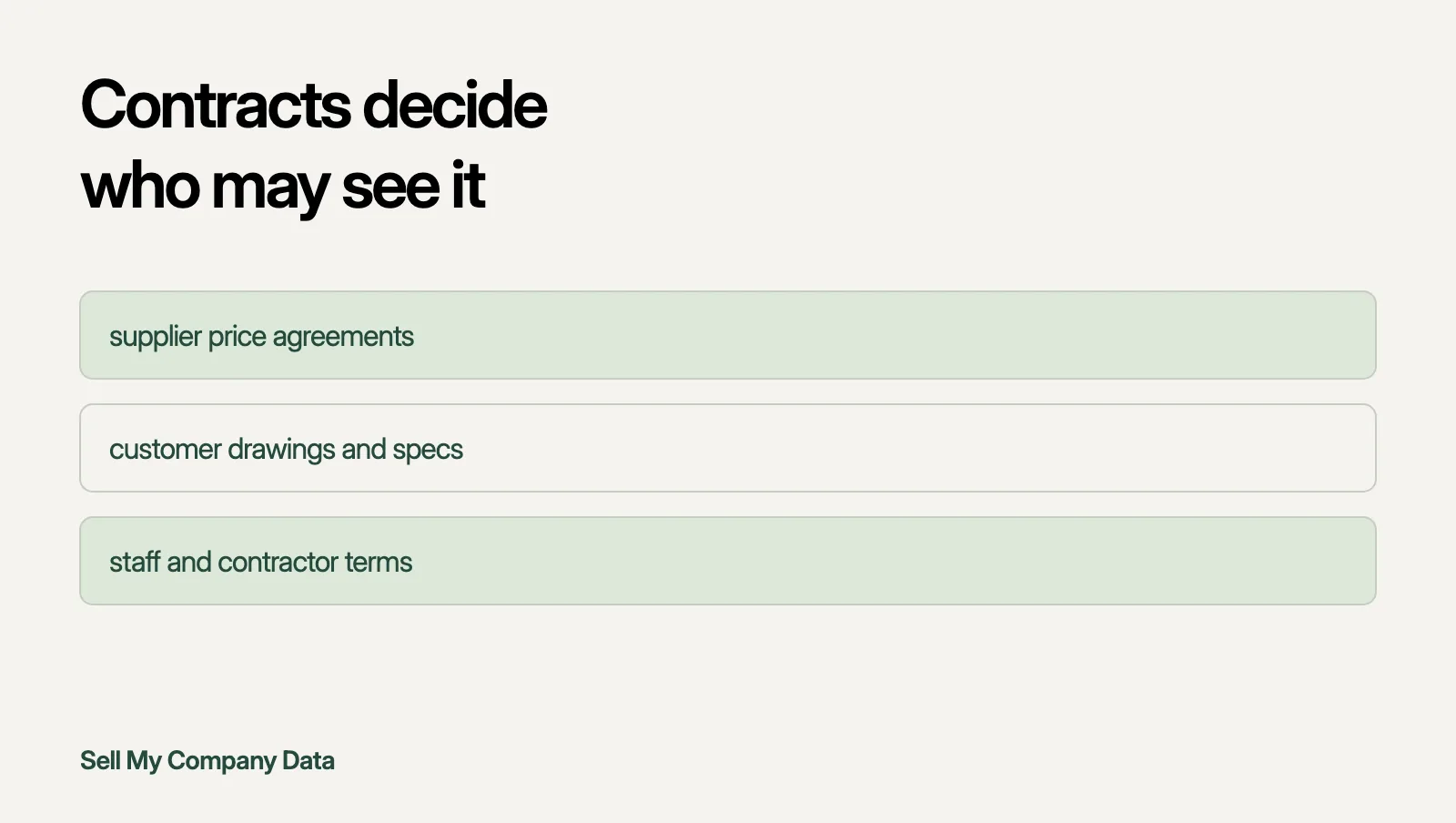
Much of an ERP export was given to you by someone else. Supplier price lists, customer drawings and agreed specifications often sit under confidentiality terms. The same regulations say that disclosing a trade secret is unlawful where it constitutes a breach of confidence in confidential information. Breach of confidence is a separate route. It can apply to information that is not a formal trade secret.
That makes the contract file as important as the data file. Find the confidentiality clause in each major supplier and customer agreement. Note whether it allows disclosure to a data licensee. If it is silent, treat that as a question for a solicitor, not as permission.
Your own staff and contractors matter here too. Process know-how that lives in a technician's notes may be covered by their employment terms, not yours alone.
Database right is a separate question
A large ERP database can carry its own right. The database right rules say a property right subsists in a database if there has been a substantial investment in obtaining, verifying or presenting the contents of the database. If your company built and checked its master data, it may hold that right in the database as a whole.
That right does not cover the contents that belong to others. It does not clear the supplier terms above. It also says nothing about the people named in operator, shift and maintenance records. Those are personal data. The definition of personal data reads: any information relating to an identified or identifiable natural person. The CRM and support ticket guides on this site explain the notice duties that follow.
Field audit: what each ERP data class needs
Go through the export by data class. The table shows the main risk and the minimum check before a buyer sees a description.
| ERP data class | Main risk | Minimum check |
|---|---|---|
| Bills of materials and routings | Core process know-how | Confirm secrecy steps and decide whether to offer it at all |
| Supplier prices and terms | Supplier confidentiality | Read the clause in each supplier agreement |
| Customer orders and drawings | Customer confidentiality and design rights | Check the customer terms before including |
| Quality and test records | May reveal specifications and defects | Review a sample with the quality lead |
| Machine and sensor logs | Process settings that reveal know-how | Check what settings a log exposes |
| Operator, shift and maintenance logs | Names of staff | Treat as personal data and decide whether it is needed |
A data class that fails its check is held back. A class you cannot explain is a class you cannot offer.
What a safe first description contains
Describe the archive in plain categories. Give the product family, the years covered, the number of plants and which data classes are present. Say which classes were left out and why.
Do not send a sample export. Do not send a part number list to prove quality. Part numbers, prices and process settings are the information most likely to be secret.
Keep a short file with your confidentiality steps, the supplier and customer clauses you checked and the decision for each data class. A careful buyer asks for that file first.
Sources
- Trade Secrets (Enforcement, etc.) Regulations 2018, regulation 2 (legislation.gov.uk). Checked 14 November 2026. Relevant text: has commercial value because it is secret
- Trade Secrets (Enforcement, etc.) Regulations 2018, regulation 3 (legislation.gov.uk). Checked 14 November 2026. Relevant text: constitutes a breach of confidence in confidential information
- Copyright and Rights in Databases Regulations 1997, regulation 13 (legislation.gov.uk). Checked 14 November 2026. Relevant text: a substantial investment in obtaining, verifying or presenting the contents of the database
- UK GDPR, Article 4 (legislation.gov.uk). Checked 14 November 2026. Relevant text: any information relating to an identified or identifiable natural person
Questions
Is ERP data a trade secret?
Some of it may be. The law asks whether the information is secret, has commercial value because it is secret and has been protected by reasonable steps. Each data class has to meet that test on its own facts.
Can I license supplier prices from my ERP?
Not safely until you read the supplier agreements. Many carry confidentiality terms, and disclosing the information can be a breach of confidence.
Do I own my ERP database?
You may hold a database right if there was substantial investment in obtaining, verifying or presenting the contents. That right does not cover contents that belong to suppliers, customers or staff.
Are operator and shift records personal data?
Usually yes, because they name or identify staff. They need the same care as any other personal data archive.
Is this legal advice?
No. It is general information about UK law. Have a solicitor review your contracts and secrecy steps before you rely on it.